
Most underperforming sales campaigns get blamed on the wrong thing.
The budget. The audience. The season. The platform. The targeting settings someone changed on a Tuesday.
Meanwhile, the campaign is trying to sell one product to thousands of different people using one image and one sentence.
That is not a targeting problem. That is a creative coverage problem — and no budget increase fixes it. It just buys the same message a bigger stage.
Here is the idea this article is built on: one campaign does not need one creative. It needs a creative system.
Not more content. More reasons for different people to care, delivered in the formats they actually respond to. That is what video and image assets are for in a sales campaign, and it’s why the right mix can move sales without moving your budget.
Quick answer: why do creative assets matter in a sales campaign?
Because a single ad can only carry one hook, one benefit, and one format — while your buyers arrive with different problems, objections, and preferences. Multiple meaningfully different video and image assets give a campaign more ways to be understood by more of the right people, more chances to test what actually persuades, and protection against a single ad wearing out.
Your Campaign May Not Have a Traffic Problem
Run this diagnostic on your own account before you read another word.
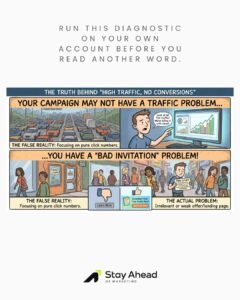 Open your campaign. Look at the ads that are actually spending. Ask one question:
How many genuinely different reasons to buy are we putting in front of people?
Most accounts answer with a number between one and two. Ten ads, one idea. The colours change. The idea doesn’t.
That campaign has plenty of impressions. It has almost no coverage.
Coverage is the word worth keeping. Your campaign reaches people you never persuade — not because they can’t be persuaded, but because the one thing you said wasn’t the thing they needed to hear. They scrolled past a message that was answering somebody else’s question.
More budget sends that same message to more people who don’t care.
One Product. Many Reasons to Buy.
 Take a brand selling water purifiers.
Six customers. Same product. Six different reasons:
- One is worried about water quality after reading something alarming
- One is thinking about her children and doesn’t want to think about it again
- One is doing maths on filter and maintenance costs over five years
- One just wants water that doesn’t taste like the tap
- One wants to stop ordering 20-litre cans every week
- One doesn’t believe any of it and wants proof it works
One creative can serve exactly one of those people well. It might glance off two more. The rest see an ad about something they weren’t worried about.
The pattern repeats everywhere.
Online course: one buyer wants a job. One wants a promotion. One wants to escape a career they chose at 19. One only cares whether the certificate is worth anything.
Skincare: one has a specific concern. One wants the routine simplified. One is switching because their old brand changed its formula. One wants to know it won’t cause a reaction.
B2B software: the manager wants time back. The finance lead wants the cost justified. The IT lead wants to know what it breaks. All three sit in the same meeting and all three have to say yes.
Modular kitchen company: one customer is buying storage. One is buying a look. One is buying “finished before the wedding.”
The product never changes. The reason to buy changes with every person. Creative variety isn’t decoration — it’s how you cover the reasons.
What One Creative Actually Costs You
Depending on one or two assets creates costs that never appear as a line item.
You reach the wrong nerve. Your hook works on people who share the concern it names. Everyone else keeps scrolling.
You can’t answer follow-up questions. A static image showing a beautiful, expensive product can’t explain why it’s expensive. The objection stays unanswered, and unanswered objections don’t buy.
You learn almost nothing. Two ads with the same idea teach you one thing: whether that idea works. Not why. Not what else might work better.
The winner may never be found. The best-performing angle for your business could be one you’ve never made an ad about. You can’t discover it by adjusting the colour of the one you did.
Your ad wears out. Frequency climbs, the audience stops noticing, costs drift up.
Retargeting becomes nagging. Someone visited your page and left — usually because of a doubt. Showing them the identical ad they already declined doesn’t resolve the doubt. It reminds them they said no.
Modern delivery systems have nothing to work with. This part isn’t opinion; both major platforms document it. Meta’s advertiser education tells you to diversify creative by concept and by format, because its delivery system matches different creative to different people. Google’s documentation for Performance Max asset groups is blunter still: add as many assets as possible — up to 15 headlines, 20 images across orientations, and 5 videos — and it uses an Ad Strength indicator to flag asset groups that don’t have enough to work with.
Both systems are built to choose. Hand them one option and you’ve made the choice for them, permanently, for every customer.
Video and Images Do Different Jobs (Stop Ranking Them)
“Video vs image” is the wrong argument. It’s like asking whether a hammer beats a screwdriver.
Are video ads better than image ads?
Neither format is universally better. Video is stronger when a customer needs to see or understand something — how it works, what it looks like in use, who’s vouching for it. Images are stronger when a customer needs to grasp one thing instantly — an offer, a benefit, a comparison, a proof point. Most strong sales campaigns run both, because they do different jobs at different moments.
 Video earns its place when you need to:
- Demonstrate the product actually working
- Explain something that takes more than five words
- Let a real customer say it in their own voice
- Show a transformation across time
- Build familiarity — the sense of “I’ve seen these people before”
- Answer an objection with tone and body language, not just text
Images earn their place when you need to:
- Land an offer in under a second
- Make one benefit unmissable
- Show the product clearly and honestly
- Put a review on screen where it can’t be skipped
- Compare two options side by side
- Remind a warm visitor of exactly what they left behind
Video builds understanding. Images create instant recognition. A campaign that only does one of those has a permanent blind spot.
The Creative Coverage Map
Here’s the framework worth stealing.
Stop counting how many creatives you have. Start mapping what they cover. Your creative library has three dimensions.
Dimension 1: Reasons
The different motivations people have for buying your product. The water purifier’s six reasons. The software’s three decision-makers.
Coverage question: how many distinct reasons are live in the account right now?
Dimension 2: Jobs
The five jobs a sales creative can do. Call them Attract, Explain, Prove, Answer, Ask.
| Job | What it does | Typical asset |
|---|---|---|
| Attract | Stops the scroll and names a problem the viewer recognises | Problem-led video, strong hook, relatable scene |
| Explain | Makes the product make sense | Demonstration, how-it-works, feature-in-context |
| Prove | Shows it’s true for people like them | Testimonial, review screenshot, before-and-after |
| Answer | Removes the specific doubt blocking the purchase | Objection video, FAQ graphic, comparison |
| Ask | Makes the decision easy right now | Offer creative, guarantee, retargeting reminder |
Most struggling accounts are heavy on Attract and Ask, and empty in the middle. They shout, then they discount. Nothing between explains or proves anything — so the customer never gets a reason, only a reminder and a deadline.
Dimension 3: Formats
Video, static, carousel, and the aspect ratios each placement needs.
Coverage question: if half your buyers watch with sound off and half scroll past video entirely, are you covered for both?
The map is the system. A campaign with four reasons × five jobs × two formats has forty possible slots. You don’t fill forty. You fill the ones your customers actually need — and you can finally see which ones are empty. That’s the difference between a creative system and a content calendar.
Video Assets You Can Use in a Sales Campaign
What types of video assets work for sales campaigns?
Product demonstrations, customer testimonials, UGC-style videos, problem-solution videos, founder videos, before-and-after videos, comparison videos, FAQ videos, objection-handling videos, and offer videos. Each influences a different part of the buying decision.
Pick by job, not by trend.
Product demonstration. The product doing the thing it promises. Best when the value is visible but hard to describe. A cordless vacuum picking up spilled rice in one pass sells better than the word “powerful.” Job: Explain.

Customer testimonial. A real customer, specific detail, own words. “I stopped ordering water cans in March” outperforms “great product.” Best for skeptical buyers and higher price points. Job: Prove.
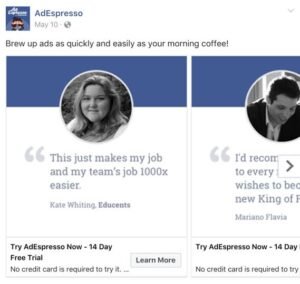
UGC-style video. Filmed like a person, not a brand. Works in feeds where polish reads as advertising. Useful for reaching people who ignore anything that looks like an ad. Job: Attract, sometimes Prove.

Problem-solution video. Open on the frustration, then resolve it. A tutor scrolling three apps to track one student’s marks, then one screen that shows it all. Best for cold audiences who haven’t yet connected their annoyance to a product. Job: Attract.
Founder video. The person behind it, saying why it exists. Works for small brands, service businesses, and anything where trust in the people is part of the purchase. Job: Prove and Answer.

Before-and-after. Honest state A, honest state B. Powerful for visible transformations — home improvement, organisation, repair. Handle with care in any health or appearance category, and don’t promise outcomes you can’t stand behind. Job: Prove.

Objection-handling video. Name the doubt out loud and answer it. “Wondering why this costs more than the one on the marketplace? Here’s what’s inside ours.” Strongest asset in retargeting, and the one most brands never make. Job: Answer.
Comparison video. Yours next to the alternative, on the criteria the buyer actually uses. Works for solution-aware buyers already choosing between options. Job: Answer.
FAQ video. The three questions your support team answers daily, answered on screen. Cheap to make, useful forever. Job: Answer.
Offer video. Short, direct, one deal, one deadline. Almost never a good first touch, almost always useful at the end. Job: Ask.
Notice how few of these need a production budget. A phone, a real customer, and a quiet room cover four of them.
Image Assets You Can Use in a Sales Campaign
What types of image assets can businesses use?
Product shots, benefit-led statics, problem-aware creatives, offer graphics, testimonial cards, before-and-after images, comparison charts, feature callouts, review screenshots, lifestyle images, carousels, and retargeting reminders.
Statics are underrated. They’re the cheapest way to test an idea before you fund a shoot.
Benefit-led static. One benefit. One image. Nothing competing. Job: Attract.
Problem-aware static. Names the frustration in the headline. “Changing filters every 3 months?” The people it’s for stop instantly. Job: Attract.
Product-focused static. Clean, honest, close enough to see the material. Sounds basic. Outperforms clever more often than agencies like to admit. Job: Explain.
Testimonial card. One quote, one name, one photo. Readable at a glance, works with sound off. Job: Prove.
Review screenshot. Your actual review, screenshotted, unedited. The rawness is the credibility. Job: Prove.
Comparison graphic. Two columns, the criteria that matter, honest ticks and crosses. Job: Answer.
Before-and-after image. Same discipline as the video version. Honest, and never in a category where it implies a health outcome. Job: Prove.
Feature callout. Product with three labelled details. Best for buyers comparing specs. Job: Explain.
Carousel. Sequential logic — a problem across five frames, or a five-step process. The format that lets a static think. Job: Explain or Answer.
Offer static. The deal, the deadline, nothing else. Job: Ask.
Retargeting static. Speaks to someone who already knows you. Different message — not the same ad again. Job: Answer or Ask.
Stop Making Variations. Start Testing Different Ideas.
This is where most creative budgets get wasted, so read it twice.
Cosmetic variation changes the surface: background colour, font, button placement, a different filter, the same video with new music.
Strategic variation changes the substance: the hook, the problem being named, the benefit being sold, the objection being answered, the proof being shown, the offer being made, the person you’re speaking to.
Ten near-identical images are not a creative strategy. They’re one idea in ten costumes — and modern delivery systems increasingly read them as one signal anyway. Meta’s own advertiser education frames diversification as diversifying by concept and format, not by decoration.
The test: cover the logo and read your ten ads aloud. If a stranger can’t tell which is which, you have one creative.
Three ads that argue three different reasons to buy will teach you more in a week than thirty recolours will teach you in a quarter.
Match Creative to the Buying Stage — Without Pretending It’s a Straight Line
Real buying journeys are messy. Someone sees a Reel, forgets you, sees a review six weeks later, asks a friend, comes back through a search, and buys at 1am from a retargeting ad. Nobody walks a funnel.
But the framework still earns its place — not as a map of behaviour, as a checklist for gaps.
Awareness — they don’t know you and don’t feel urgency. The job is Attract. Problem-led video, a hook that names something they recognise, a relatable scene. Nobody at this stage cares about your 15% discount.
Consideration — they get it, they don’t trust it. The job is Explain and Prove. Demonstrations, testimonials, comparisons, FAQs. This is the stage most brands skip, and the stage where most sales are lost.
Decision — they’re convinced but hesitating. The job is Answer and Ask. Objection handling, guarantees, social proof, a clear offer. The hesitation is usually one specific doubt. Find it and answer it.
The gap test is simple. If every asset in your account does the Attract job, you’re paying for attention you never convert. If every asset does the Ask job, you’re discounting to people who don’t yet know what they’re being offered.
A Practical Creative Mix to Start With
This is a starting point, not a formula. Anyone selling you a universal creative formula is selling you a template.
A campaign for a considered purchase might launch with eight assets:
| # | Asset | Job | Reason it covers |
|---|---|---|---|
| 1 | Problem-solution video | Attract | The main frustration |
| 2 | UGC-style hook video | Attract | A second, different frustration |
| 3 | Product demonstration | Explain | “Does it actually work?” |
| 4 | Customer testimonial video | Prove | “Does it work for people like me?” |
| 5 | Benefit-led static | Attract | The strongest single benefit |
| 6 | Comparison creative | Answer | “Why you and not them?” |
| 7 | Testimonial or review static | Prove | Proof for scrollers who won’t watch video |
| 8 | Retargeting creative | Answer / Ask | The specific doubt that stopped them |
Read down the Job column. Every job is covered. That’s the point — not the number eight.
Your right mix depends on:
- Product complexity — a low-cost impulse buy needs less Explain than a major home investment
- Buying cycle length — long cycles need more Prove and Answer
- Proof available — no testimonials yet? Founder video and demonstration carry more load
- Budget — a small budget can’t learn from twenty assets; it can barely learn from four
- Platform — search intent and feed interruption need different openings
- Campaign maturity — a mature account with known winners is scaling directions, not hunting for one
How many creatives should a sales campaign use? There’s no universal number. The useful question is coverage, not count: enough meaningfully different assets to address your main buying reasons and the five creative jobs, and enough budget per asset that each can gather usable data before you judge it. For most small and mid-sized campaigns, that’s a handful of genuinely different ideas — not twenty versions of one.
How to Test Creative Without Fooling Yourself
How do you test ad creatives? Start with a hypothesis about why a creative might work, change one meaningful thing at a time when your goal is to learn, give each creative enough budget and time to produce reliable data, judge it on business outcomes rather than clicks alone, and look for patterns across winners instead of treating each result as isolated.
Expanded, that’s five habits.
1. Write the hypothesis first. Not “let’s try a UGC video.” Try: “Buyers hesitate because they don’t believe the install is easy. A 20-second video of a real install should reduce that hesitation and lift conversion rate.” Now the result teaches you something either way.
2. Change one thing that matters. New hook, same offer. Same hook, new proof. If you change the hook, the format, the offer, and the audience at once and it wins — congratulations, you know nothing about why.
3. Be patient with the data. This trips up almost everyone. Google’s own guidance for Performance Max asset groups is to wait two to three weeks before deciding to replace low-performing assets. Killing a creative after 400 impressions isn’t discipline. It’s noise-chasing with a confident face.
4. Look past the click. Metrics tell different parts of the story, and none of them tells it alone:
- Early attention signals (thumb-stop, 3-second views) — did it stop anyone?
- CTR — did the promise interest them? High CTR with no sales usually means the ad promised something the page didn’t deliver.
- Landing page engagement — did the ad set the right expectation?
- Conversion rate — did the belief survive the price?
- CPA and ROAS — is it economic?
- Lead quality — in lead gen, the cheapest creative frequently produces the worst leads. Track to closed revenue or you’re optimising for the wrong thing.
A creative with a mediocre CTR and an excellent CPA is not a failure. It’s a filter.
5. Read across winners, not just within them. Three winners in a row all mentioned time savings? That’s not three data points. That’s a market telling you what it cares about.
Creative Fatigue: What It Is and How to Spot It Early
What is creative fatigue? Creative fatigue is the performance decline that happens when your audience has seen the same ad too many times and stops responding to it. It isn’t a sign the creative was bad — it’s a sign it worked long enough to get used up.
The tells:
- Frequency climbing while results flatten
- Cost to reach fresh people rising — the system is running out of responsive audience for that creative
- CTR sliding on a creative that used to perform
- CPA creeping up with no other change in the account
- Comments turning irritable — “I’ve seen this ten times” is a metric
How often should ad creatives be changed? There’s no fixed schedule. Refresh rate depends on audience size, budget, and frequency: a large audience with modest spend can run a creative for months, while a small audience with heavy spend can exhaust one in days. Watch frequency and cost trends rather than the calendar — and note that a diverse creative library slows fatigue by itself, because delivery systems can rotate genuinely different assets to the same person instead of repeating one.
That’s the quiet argument for coverage. It doesn’t just find more buyers. It makes the ones you found last longer.
You Found a Winner. Now Find Out Why.
A winning creative is not an asset to run forever. It’s evidence.

Before you scale it, interrogate it:
- Was it the hook, or would that hook work on any product?
- Was it the pain point — did you finally name the thing they feel?
- Was it the proof — this specific customer, this specific detail?
- Was it the offer, or the deadline attached to it?
- Was it the format — the demonstration, or the fact it was watchable with sound off?
- Was it the segment — did it accidentally find a customer type you weren’t targeting?
Then turn the answer into a direction.
Worked example. A testimonial video where a customer says the product saved her four hours a week becomes your top performer. The lazy move is to run it harder until it dies. The system move is to test the idea:
- A different customer, same time-saving benefit — is it the message or the messenger?
- A static testimonial card with the same quote — does it work without the video?
- A founder video explaining how the time is saved — does the claim survive without a customer saying it?
- A demonstration showing the four hours disappearing — does proof beat testimony?
- A comparison creative built on time — does it hold up against the alternative?
One winning ad becomes five tests and, usually, a creative direction you can produce against for six months.
This is the scalable version of creative. Hunting for one magic ad is a lottery ticket. Building directions is a system — and systems survive fatigue, platform changes, and the day your best creative stops working.
 Nine Mistakes That Quietly Cap Your Sales
1. Running one creative far too long. It didn’t stop working today. It’s been fading for three weeks.
2. Making ten assets that all say one thing. Volume without variety. The most expensive way to learn nothing.
3. Assuming production quality equals performance. An expensive film can lose to a phone video of a real customer. Polish is not persuasion. Sometimes polish is the thing being scrolled past.
4. Copying competitors without reading the strategy. You can see their ad. You can’t see their margin, their offer, their audience, or whether it’s even working.
5. Making every ad about you. Your milestones, your anniversary, your award. The customer is thinking about their problem. Lead there.
6. Ignoring your comment section. Every repeated question is a creative brief someone wrote for you for free. Every objection in your DMs is an Answer asset waiting to be made.
7. Testing design instead of message. Six months of button colours while the actual reason people don’t buy goes unaddressed.
8. Optimising for CTR. Clicks aren’t revenue. A curiosity hook can print clicks and sell nothing.
9. Serving cold audiences and warm visitors the same ad. One doesn’t know you. The other declined you. They need different conversations.
Your Next Campaign Doesn’t Need a Bigger Budget First
It needs more ways to communicate why the customer should care.
Budget amplifies whatever your creative already does. If the message reaches one type of buyer, more money reaches more people it doesn’t fit.
So before you raise spend, run the audit. Open the campaign and answer honestly:
- How many different customer problems are we actually addressing?
- How many buying reasons are we testing right now?
- How many formats are we in — and are we covered for people who never watch video?
- What objections are we answering, and where’s the asset that answers them?
- What proof are we showing, and would a stranger find it credible?
- Are we creating genuinely different ideas — or redesigning the same one?
Write the answers down. The gaps are your creative brief.
Then pick the three biggest gaps and build one asset for each. Not thirty. Three, aimed at reasons you’ve never argued before.
More sales rarely come from saying the same thing louder. They come from giving the right customer one more reason to understand why this is worth buying.
FAQ Section
Why are creative assets important in a sales campaign?
Because a single ad carries one hook, one benefit, and one format, while buyers arrive with different problems and objections. Multiple meaningfully different assets give a campaign more ways to be understood, more chances to learn what persuades, and protection against a single ad wearing out. Modern delivery systems also match different creative to different people, so a single asset limits what the platform can do on your behalf.
Are video ads better than image ads?
Neither format is universally better. Video suits moments when the customer needs to see or understand something — a demonstration, a testimonial, a transformation. Images suit moments when one idea has to land instantly — an offer, a benefit, a comparison, a review. Most strong sales campaigns run both because they do different jobs.
How many creatives should a sales campaign use?
There’s no universal number. Coverage matters more than count: enough meaningfully different assets to address your main buying reasons and the five creative jobs (Attract, Explain, Prove, Answer, Ask), and enough budget per asset for each to gather usable data. Google’s Performance Max documentation recommends adding as many assets as possible and uses an Ad Strength indicator to flag when an asset group has too few.
What types of video assets work for sales campaigns?
Product demonstrations, customer testimonials, UGC-style videos, problem-solution videos, founder videos, before-and-after videos, comparison videos, FAQ videos, objection-handling videos, and offer videos. Choose by the job the asset needs to do, not by format trends.
What types of image assets can businesses use?
Benefit-led statics, problem-aware statics, product shots, testimonial cards, review screenshots, comparison graphics, feature callouts, before-and-after images, carousels, offer graphics, and retargeting creatives.
What is creative fatigue?
Creative fatigue is the performance decline that occurs when an audience has seen the same ad too many times and stops responding. It signals overexposure rather than poor creative. Warning signs include rising frequency, rising cost to reach new people, falling CTR on a previously strong ad, and CPA drifting up with no other change.
How often should ad creatives be changed?
There’s no fixed schedule. It depends on audience size, spend, and frequency. Watch frequency, cost for fresh reach, and CPA trends rather than the calendar. A diverse creative library slows fatigue on its own, because the system can rotate genuinely different assets instead of repeating one.
How do you test ad creatives?
Start with a hypothesis about why a creative might work. Change one meaningful thing at a time when your goal is to learn. Give each creative enough budget and time — Google advises waiting two to three weeks before replacing low-performing Performance Max assets. Judge on downstream outcomes (conversion rate, CPA, revenue, lead quality) rather than clicks alone, and look for patterns across winners.
What should you do when an ad creative performs well?
Identify why it worked — the hook, the pain point, the proof, the offer, the format, or the segment — then build new executions around that idea rather than running the same asset until it fatigues. One winning testimonial about saving time should become a set of tests: a different customer, a static version, a founder explanation, a demonstration, and a comparison built on the same benefit.
Keep learning with people doing the work.
Join the Stay Ahead community for useful marketing updates, practical resources, workshops, and real conversations.